
Hybrid Filmmaking: A Practical Guide to Mixing Live Action and AI
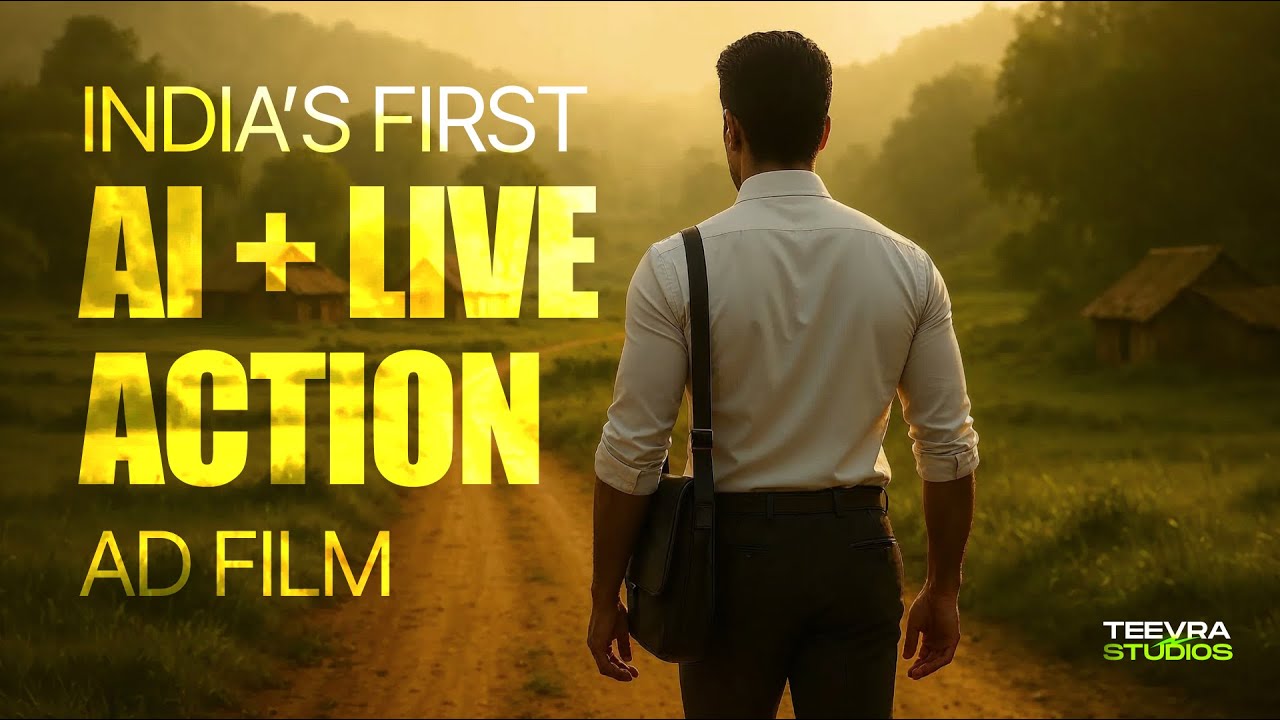
Some stories need a real face. Some need a world that does not exist on any location. Hybrid filmmaking is for stories that need both, cut together into one film that the audience experiences as a single story.
A real example: Bayer Arize
For Bayer’s Arize, Teevra Studios worked with Khurafati Studios. Khurafati led the scenes shot with real actors and locations, and Teevra created the other half with AI-generated cinematic visuals. The goal was for viewers to see one story, with no seam.
Five questions to decide if hybrid is right
1. Does the story need human performance in key moments? If yes, shoot those scenes with actors.
2. Does it need scale or settings that are hard to reach, such as a vast landscape or a stylised world? Generate those.
3. Do you need many versions, such as languages or regional looks? AI-made scenes are easier to vary.
4. Is the look consistent? Both halves must share the same grade, light and design language.
5. Is the edit planned? Decide where the film moves between live action and AI before anyone shoots.
What makes the seam disappear
Agree the colour palette and lighting references first. Share the storyboard between both teams. Match camera language, such as lens feel and movement. And grade everything together at the end.
Hybrid is also one of Teevra’s biggest offerings, for branded films and for series. If you have a brief where live action and AI could each do what they do best, write to namaste@teevra.co.
Half AI, Fully Revolutionary: Teevra & Khurafati Studios Redefines Filmmaking
Some stories need a real face. Some need a world that does not exist on any location. Hybrid filmmaking is for stories that need both, cut together into one film that the audience experiences as a single story.
A real example: Bayer Arize
For Bayer’s Arize, Teevra Studios worked with Khurafati Studios. Khurafati led the scenes shot with real actors and locations, and Teevra created the other half with AI-generated cinematic visuals. The goal was for viewers to see one story, with no seam.
Five questions to decide if hybrid is right
1. Does the story need human performance in key moments? If yes, shoot those scenes with actors.
2. Does it need scale or settings that are hard to reach, such as a vast landscape or a stylised world? Generate those.
3. Do you need many versions, such as languages or regional looks? AI-made scenes are easier to vary.
4. Is the look consistent? Both halves must share the same grade, light and design language.
5. Is the edit planned? Decide where the film moves between live action and AI before anyone shoots.
What makes the seam disappear
Agree the colour palette and lighting references first. Share the storyboard between both teams. Match camera language, such as lens feel and movement. And grade everything together at the end.
Hybrid is also one of Teevra’s biggest offerings, for branded films and for series. If you have a brief where live action and AI could each do what they do best, write to namaste@teevra.co.

Full-Stack AI Filmmaking with Human Mastery
Teevra Studios
GenAI
production
house
+91 91112 24440

Full-Stack AI Filmmaking with Human Mastery
Teevra Studios
GenAI
production
house